What is Bronchoplasty?
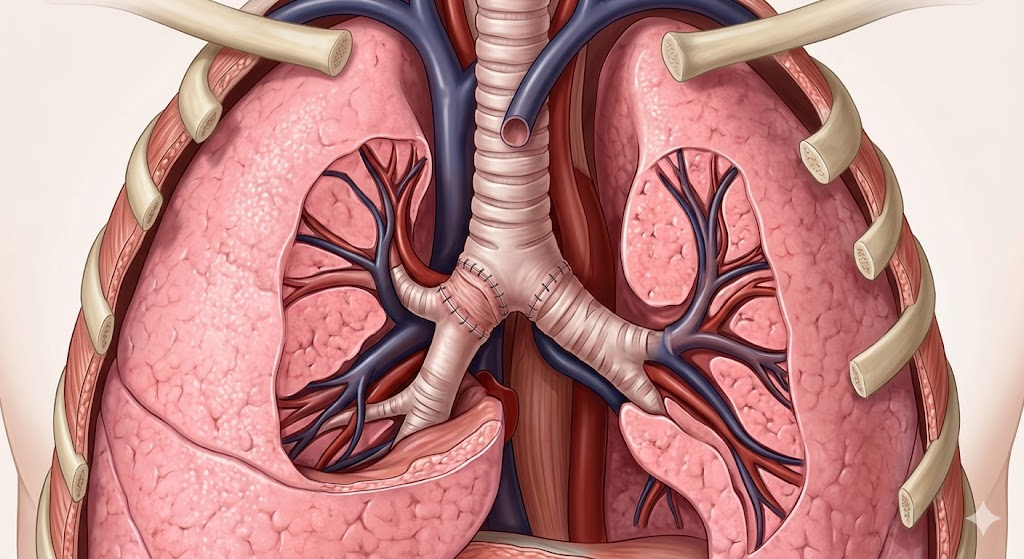
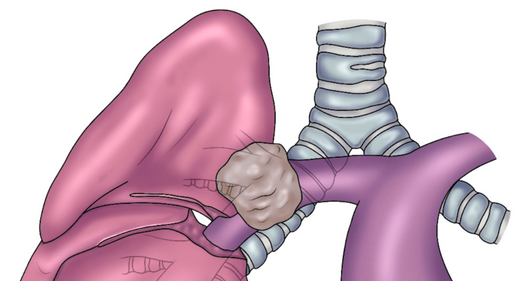
Bronchoplasty is an advanced thoracic surgical procedure performed to repair, reconstruct, or reshape the bronchial tubes (airways) of the lungs. The bronchi are the major air passages that carry air from the trachea into the lungs. Bronchoplasty is commonly used to treat airway narrowing, tumors, lung damage, congenital abnormalities, trauma, or blockage affecting normal breathing.
Unlike traditional surgeries that may require removal of an entire lung, bronchoplasty focuses on preserving healthy lung tissue while restoring proper airway function. The procedure helps improve breathing, maintain lung capacity, and enhance overall respiratory health.
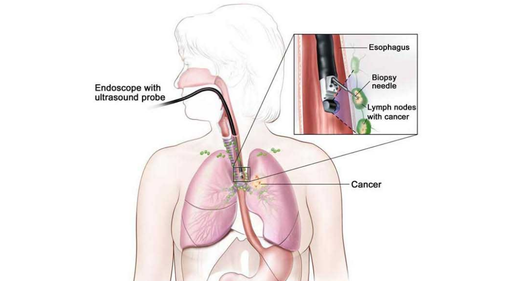
Modern bronchoplasty techniques allow surgeons to reconstruct damaged airways with precision while preserving as much healthy lung tissue as possible. This lung-sparing approach offers better long-term respiratory outcomes and improved quality of life for patients.
Why is Bronchoplasty Performed?
Bronchoplasty may be recommended for several conditions affecting the bronchial airways.
- Bronchial tumors
- Lung cancer involving the airways
- Airway narrowing (bronchial stenosis)
- Traumatic airway injuries
- Congenital airway abnormalities
- Severe infections damaging the bronchi
- Scar tissue formation
- Obstruction of the bronchial tubes
What Problems Can Bronchial Disease Cause?
Diseases or blockage of the bronchi can interfere with airflow and significantly affect breathing function.
- Shortness of breath
- Chronic cough
- Wheezing
- Chest discomfort
- Repeated lung infections
- Reduced oxygen supply
- Difficulty breathing during activity
- Persistent airway obstruction
How Does Bronchoplasty Work?
Bronchoplasty works by removing diseased or damaged portions of the bronchial airway and reconstructing the remaining healthy airway to restore normal airflow.
During the procedure, surgeons carefully reconnect healthy airway segments using specialized surgical techniques. In many cases, surrounding healthy lung tissue can be preserved instead of removing an entire lung.
This lung-preserving approach helps maintain better respiratory function and improves recovery compared to more extensive lung removal procedures.
Types of Bronchoplasty Procedures
Different bronchoplasty techniques are used depending on the patient’s airway condition and extent of disease.
- Sleeve Bronchoplasty : A diseased segment of the bronchus is removed and the healthy ends are reconnected while preserving lung tissue.
- Bronchial Reconstruction : Damaged airways are repaired or reshaped to improve airflow and breathing.
- Carinal Reconstruction : A more complex procedure involving reconstruction near the tracheal bifurcation where the main bronchi divide.
- Bronchial Stenosis Repair : Narrowed airways are widened to restore normal airflow.
- Combined Lung and Airway Surgery : In some cases, bronchoplasty is combined with partial lung removal for tumor treatment.
Sleeve Bronchoplasty
Sleeve bronchoplasty is one of the most common bronchoplasty procedures. It is often used for lung tumors located near the bronchial tubes.
Instead of removing the entire lung, surgeons remove only the affected airway segment and reconnect the healthy bronchial ends. This preserves lung function while effectively treating the disease.
Benefits of Bronchoplasty
Bronchoplasty offers several medical and functional benefits for patients with airway disease.
Medical Benefits
- Improved airflow
- Preservation of healthy lung tissue
- Better breathing capacity
- Reduced airway obstruction
- Lower risk of recurrent infections
- Improved oxygen exchange
Functional Benefits
- Improved physical activity tolerance
- Reduced shortness of breath
- Better respiratory function
- Improved quality of life
- Preserved lung performance
Advantages of Bronchoplasty
- Lung-sparing surgical technique
- Preserves healthy airway structures
- Improves long-term breathing outcomes
- Advanced reconstructive approach
- Customized surgical planning
Who Is an Ideal Candidate?
Bronchoplasty may be suitable for patients who:
- Have bronchial tumors
- Need airway reconstruction
- Have localized airway disease
- Require lung-preserving surgery
- Experience airway narrowing
- Have adequate lung function
- Are medically fit for surgery
- Need treatment for bronchial obstruction
Consultation Before Bronchoplasty
A detailed preoperative evaluation is important before bronchoplasty surgery.
- Medical history review
- Lung function testing
- CT scan evaluation
- Bronchoscopy examination
- Airway assessment
- Evaluation of respiratory health
- Discussion of surgical options
Preparation Before Surgery
Patients receive preoperative instructions to help ensure surgical safety and smooth recovery.
- Avoid smoking before surgery
- Complete required imaging tests
- Follow fasting instructions
- Maintain good hydration
- Stop certain medications if advised
- Practice breathing exercises
Procedure of Bronchoplasty
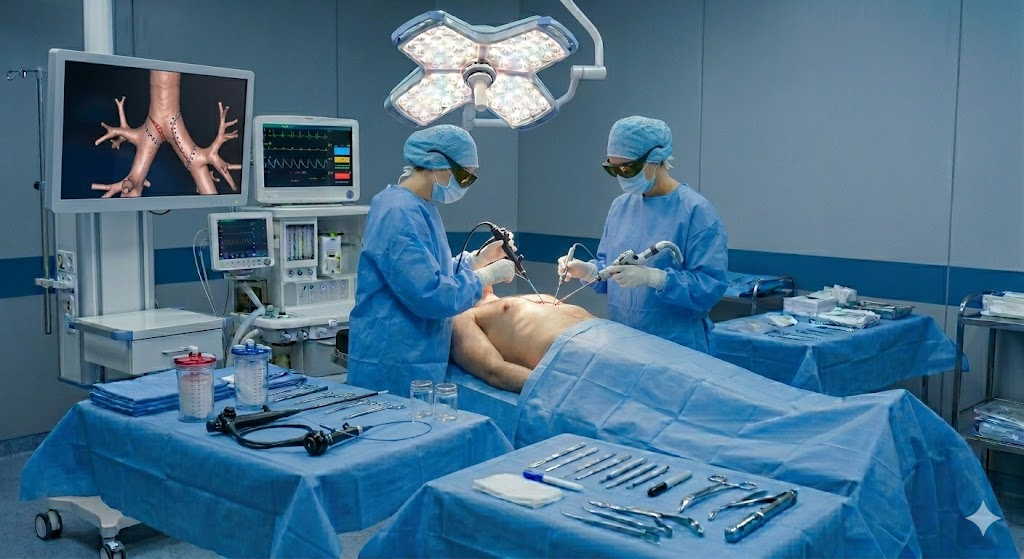
Bronchoplasty is usually performed under general anesthesia by experienced thoracic surgeons.
The surgeon carefully accesses the chest cavity and identifies the affected airway segment. Diseased portions of the bronchus are removed while preserving as much healthy lung tissue as possible.
The healthy airway ends are then precisely reconstructed and reconnected to restore normal airflow. In some cases, minimally invasive thoracoscopic techniques may be used.
Recovery After Bronchoplasty
Recovery after bronchoplasty varies depending on the extent of surgery and overall lung condition.
Common Temporary Effects
- Chest discomfort
- Mild pain
- Temporary breathing difficulty
- Fatigue
- Swelling around surgical areas
- Coughing
Respiratory exercises and proper postoperative care help improve lung recovery and breathing function over time.