Leg Wound with Exposed Bone – Causes, Treatment & Recovery
A leg wound with exposed bone is a serious medical condition that requires immediate medical attention. These wounds usually occur after severe trauma, accidents, infections, diabetic complications, burns, or chronic non-healing ulcers. When the skin, muscles, and soft tissues are damaged deeply enough to expose the bone, the risk of infection, tissue death, and limb loss increases significantly.
Proper wound management, advanced surgical care, and timely treatment are essential to save the limb and restore normal function. Modern reconstructive and plastic surgery techniques now make it possible to successfully treat even complex wounds with exposed bone.
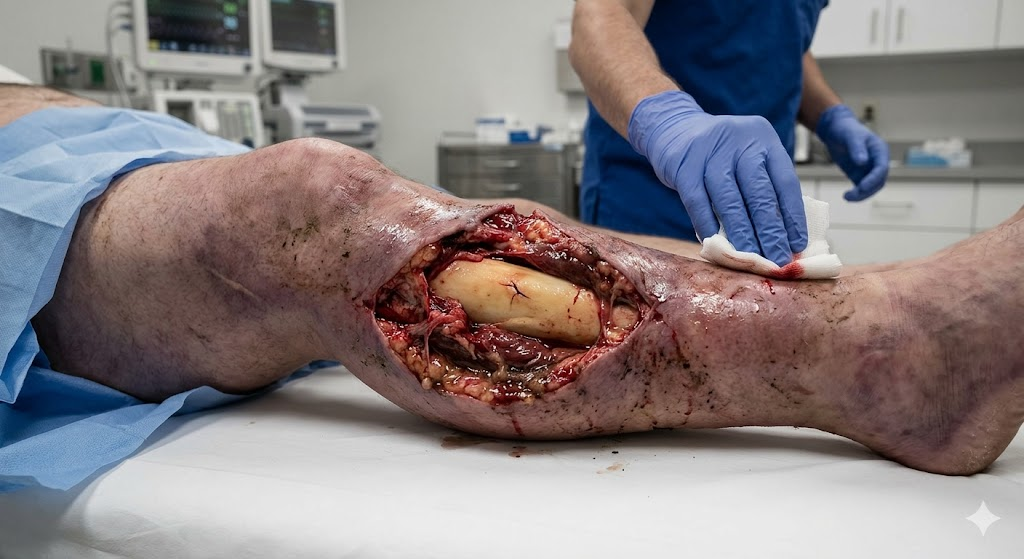
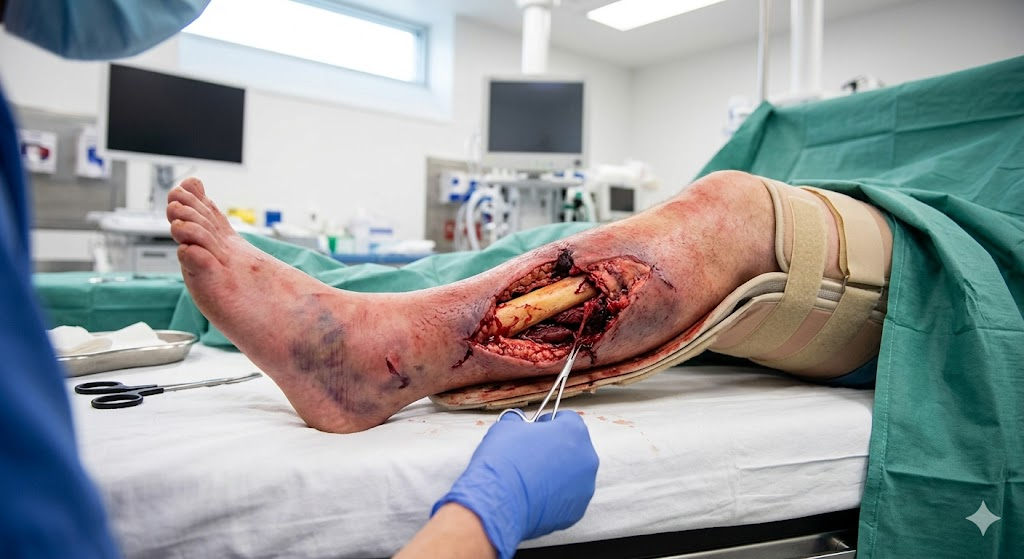
What is a Leg Wound with Exposed Bone?
A leg wound with exposed bone refers to a deep injury where the protective soft tissue covering the bone is lost. Normally, bones are protected by layers of skin, fat, fascia, and muscles. When these tissues are severely damaged, the bone becomes visible and vulnerable to infection.
Such wounds are considered complex wounds and often require multidisciplinary treatment involving plastic surgeons, orthopedic surgeons, wound care specialists, and physiotherapists.
Common Causes of Exposed Bone Wounds
1. Road Traffic Accidents
- High-speed accidents can crush tissues and expose bones due to severe trauma.
2. Diabetic Foot Ulcers
- Patients with uncontrolled diabetes may develop deep infected ulcers that gradually expose underlying bones.
3. Burns
- Severe thermal or electrical burns can destroy soft tissues completely.
4. Infection
- Untreated infections may destroy surrounding tissue and expose the bone.
5. Pressure Sores (Bedsores)
- Long-standing bedsores in immobilized patients can become deep enough to expose bone.
6. Surgical Complications
- Sometimes after orthopedic surgeries or implant procedures, wound breakdown may occur.
7. Chronic Non-Healing Wounds
- Poor blood supply, smoking, malnutrition, or vascular disease may prevent wound healing.
Symptoms of Leg Wounds with Exposed Bone
Patients may experience:
- Severe pain
- Visible bone in the wound
- Swelling and redness
- Bleeding or pus discharge
- Foul smell from the wound
- Fever and infection
- Difficulty walking
- Blackened or dead tissue
- Delayed wound healing
If not treated early, the infection can spread into the bone causing osteomyelitis, a dangerous bone infection.
Why Immediate Treatment is Important
Exposed bone wounds should never be ignored. Delayed treatment can lead to:
- Bone infection
- Tissue necrosis
- Gangrene
- Sepsis
- Permanent disability
- Limb amputation
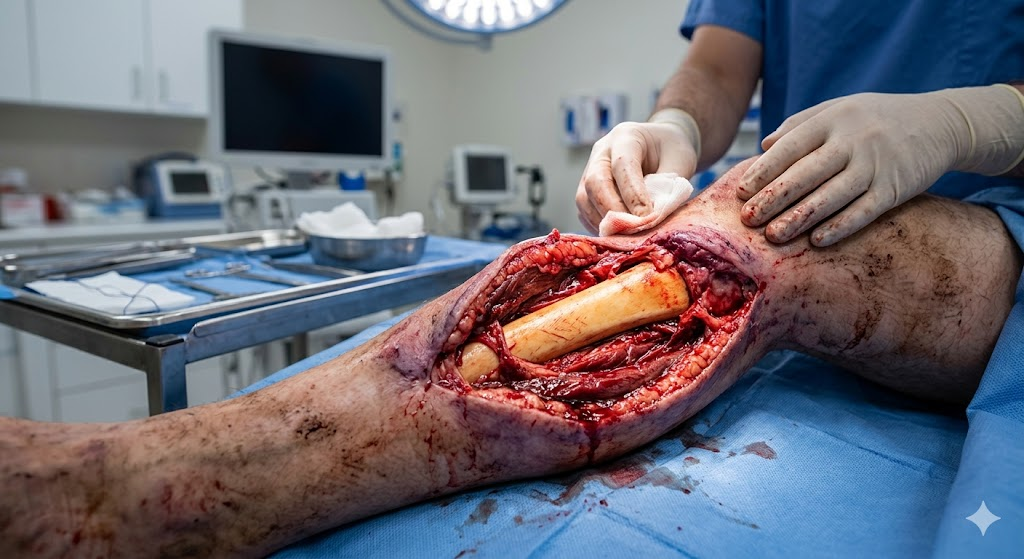
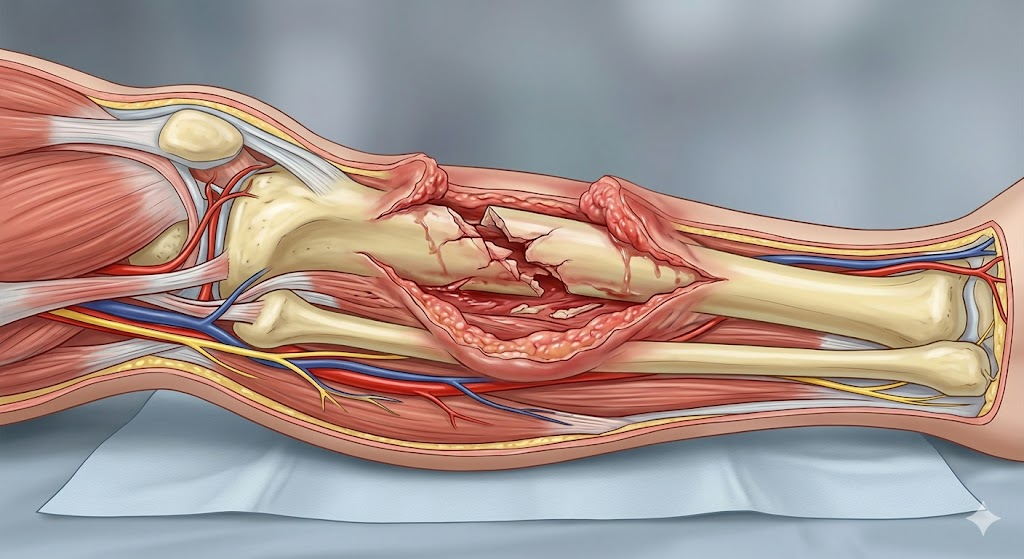
Recovery After Surgery
Recovery depends on:
- Severity of injury
- Infection control
- Blood circulation
- Patient health condition
Patients may require:
- Regular dressing changes
- Physiotherapy
- Nutritional support
- Blood sugar control
- Follow-up wound care